MEXICAN PAVILION IN THE UNIVERSAL EXPO IN HANNOVER 2000
Category: Institutions
Region: Europe
Year: 2000
Location: HANNOVER, GERMANY
FT2 Construction: 29,063 sq ft
FT2 Ground: 0 sq ft
Involved Areas: Architecture
Collaborators:
LEGORRETA®
Ricardo Legorreta
Víctor Legorreta
Noé Castro
Miguel Almaraz
Adriana Ciklik
Associate Architects:
ARQUITECTO ASOCIADO: TDM Arquitectos
Consultants:
MUSEOGRAPHY: Museo del Niño “Papalote” Marinella Servitje
THEMATIC SCRIPT: Enrique Krauze
PROJECT DEVELOPMENT: Bahlo Koehnke & Partners
STRUCTURAL DESIGN: Eilers & Vogel GMBH
INSTALLATION DESIGN: Schmidt Reuter & Partners
LIGHTING DESIGN: ARQUITECTURA AUTOMATICA
CONTRACTOR: ARGE
Photographer:
Gabriel Figueroa
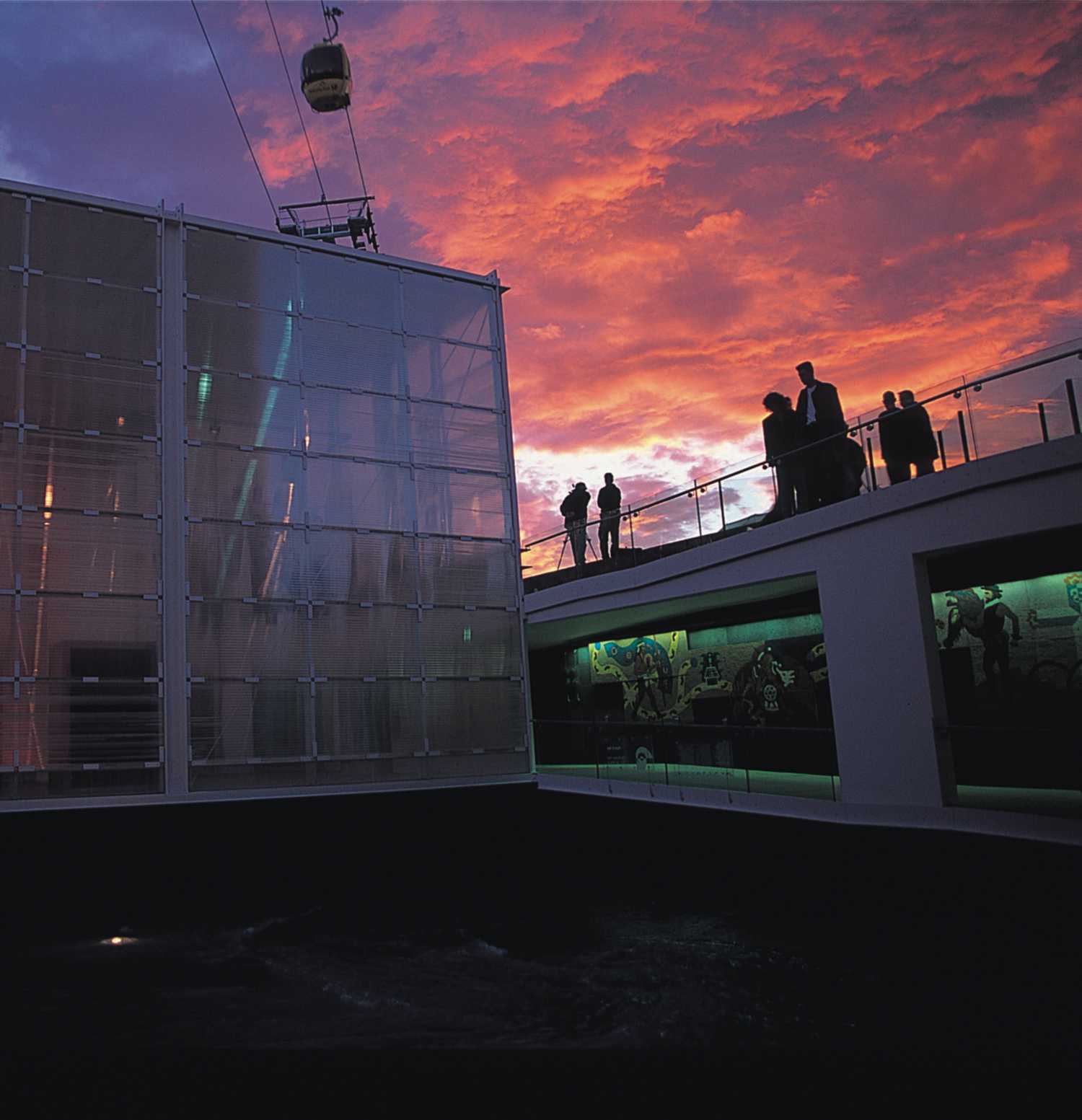
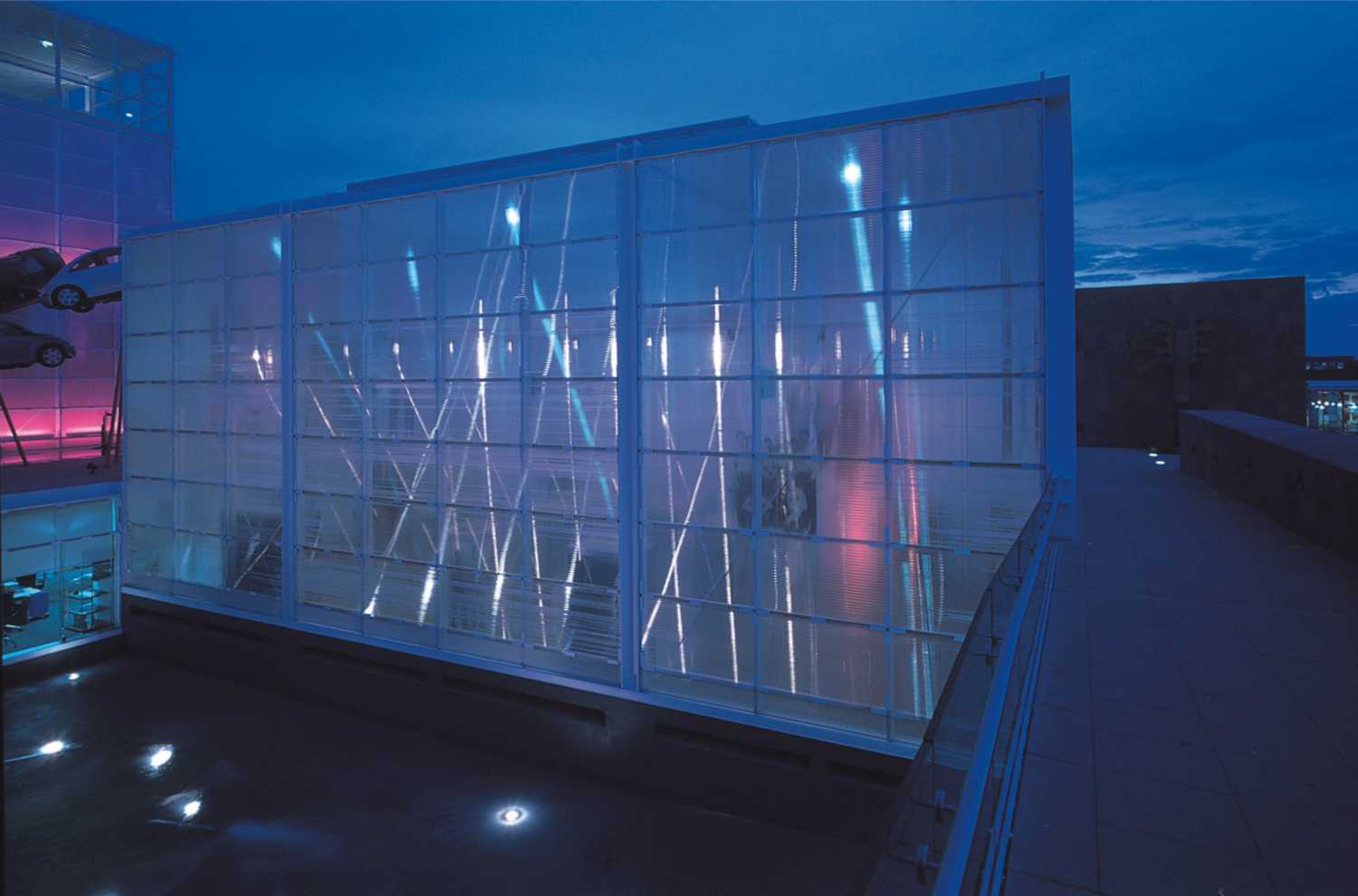
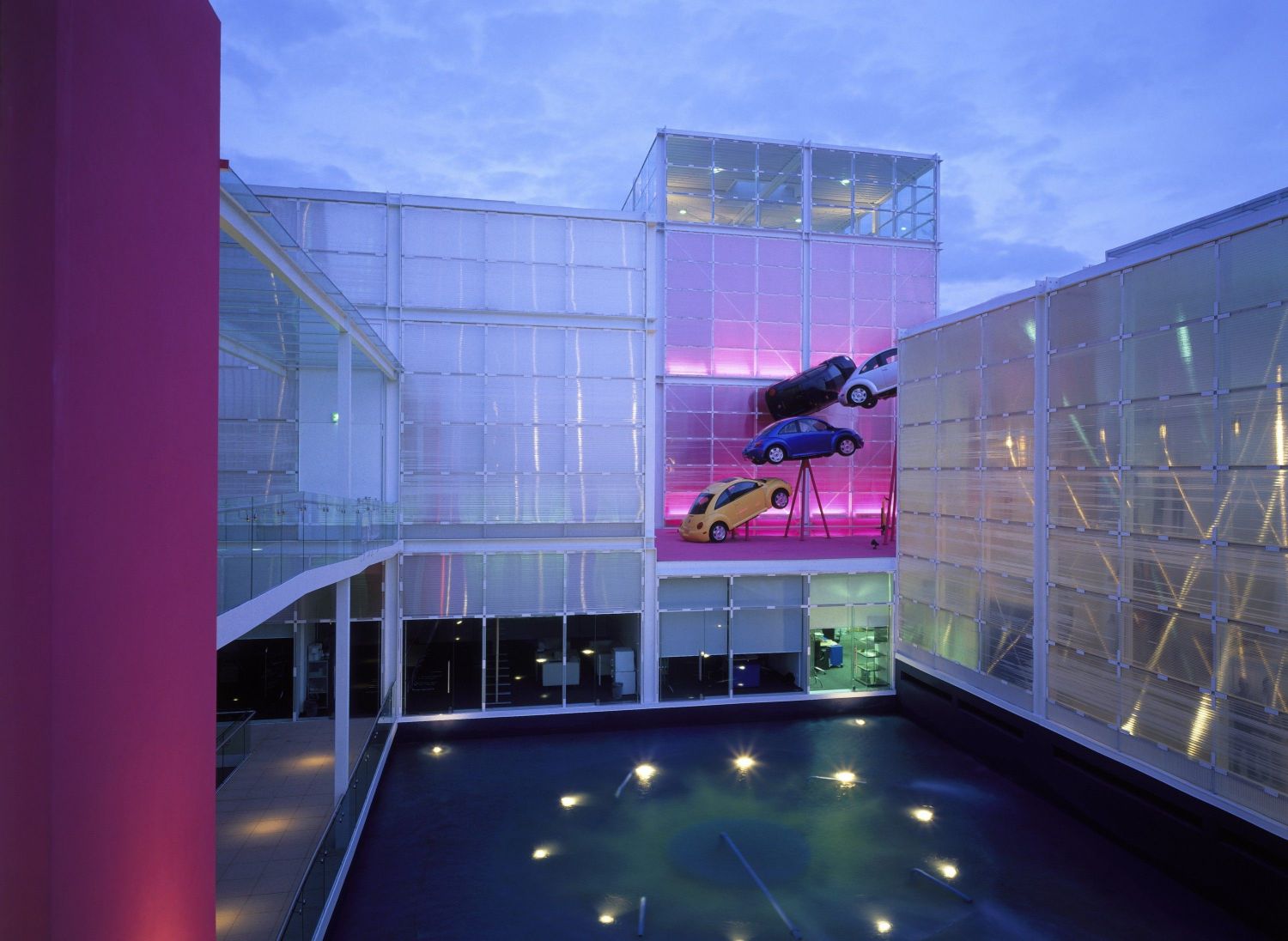
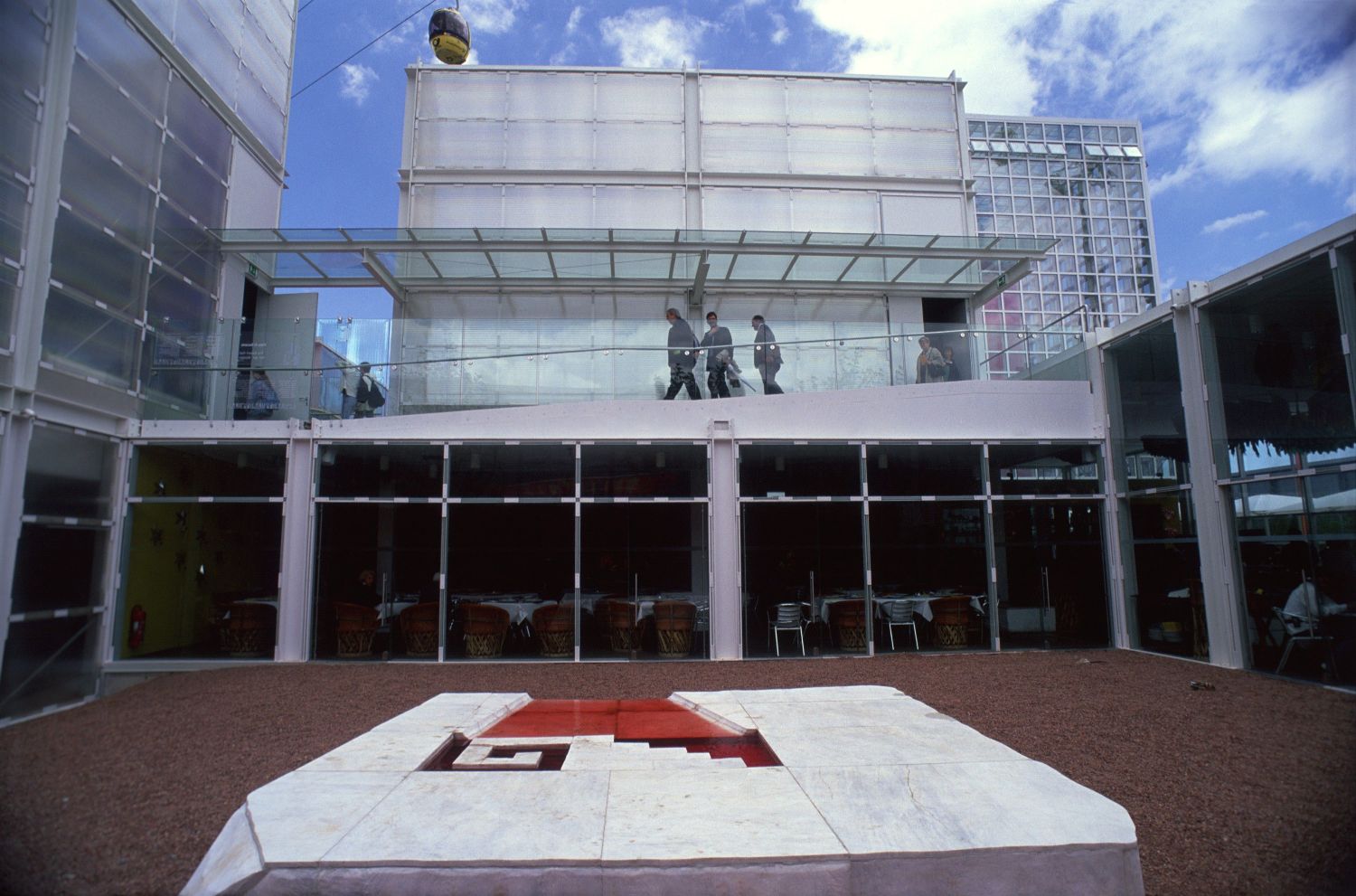
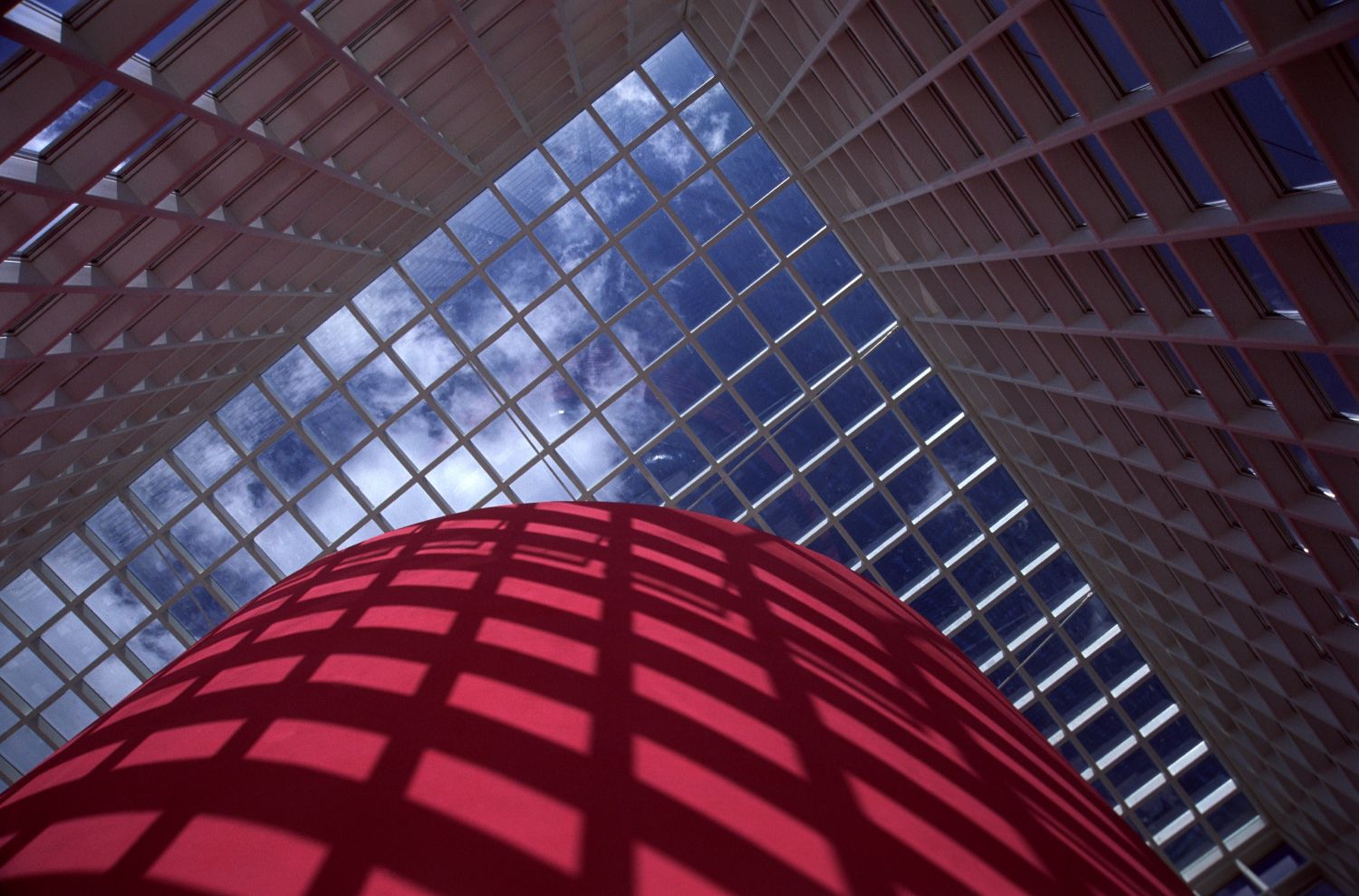
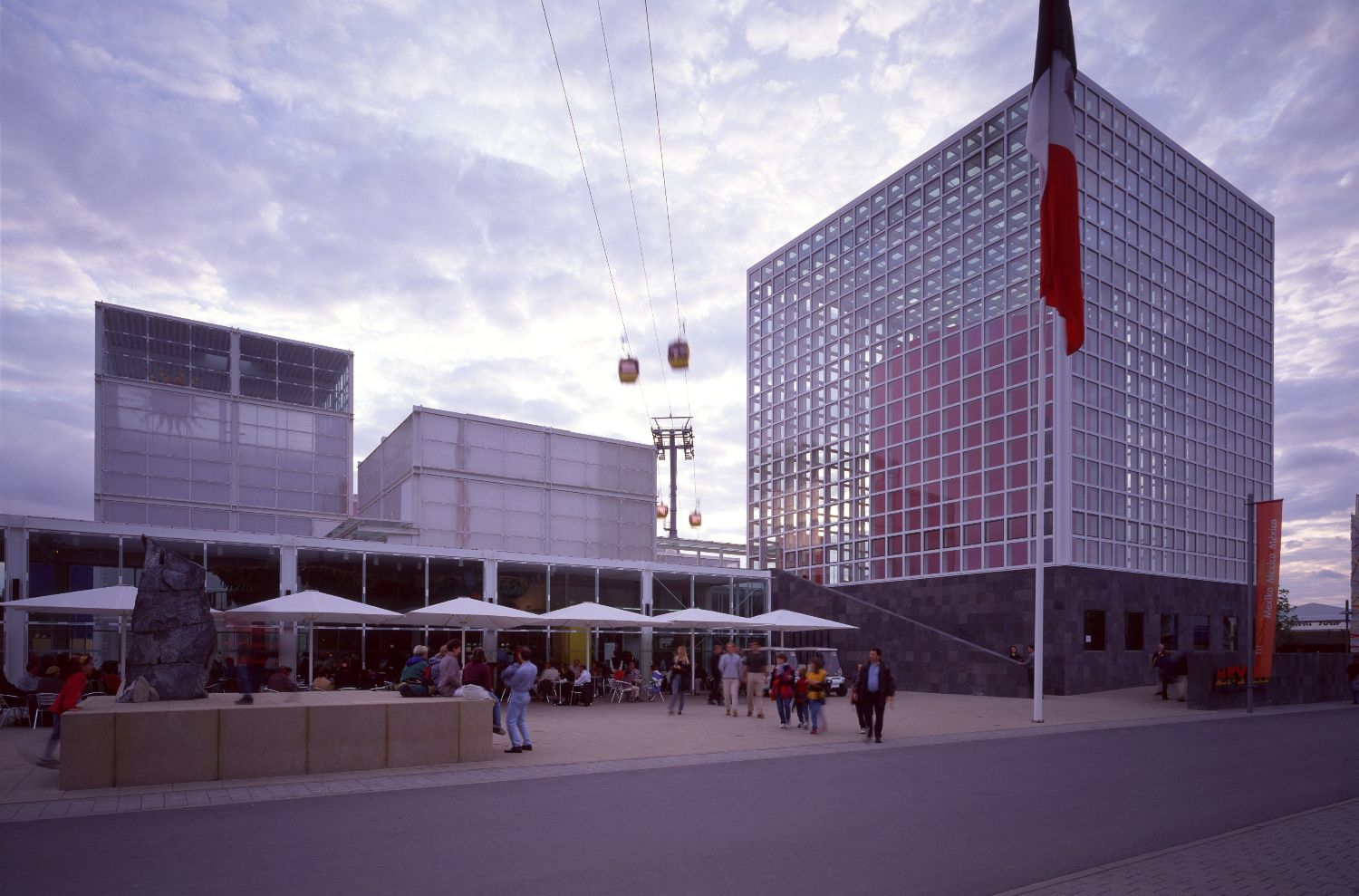
Set on the west side of the Hannover 2000 International Fair site, Mexicos Pavilion was located on a flat ground, surrounded by the buildings from Colombia, Thailand and Uruguay. The project was conceived in conjunction with the museum graphic theme, which produced the creation of five architectural and thematical spaces joined by circulation areas provoking interesting spaces, full of surprises. The architectural volumes are set in a checker board in order to create interior “patios” in which different Mexican arrangements are expressed: the desert, the ocean and the rain forest. The representation of these ambiances is conceived as an abstraction. The use of characteristic elements of each area with a sculptural and plastically intention, conveys an idea of each of these systems through the abstraction of reality. The architecture of the buildings is represented by large crystal boxes that based on clear and dark elements, pretend to create a game of images. The constant movement of the panels on the façade interacts with the museography, between interior and exterior, light and darkness, and color. The ramps communicating the different volumes are designed in such way so that they are not only just an element of circulation. Their objective is that it might be really interesting and amusing to pass from one volume to the other. In some cases, the ramps turn into bridges that cross over thematic “patios”, so that the visitor can have a wide perspective over the sculptural spaces. The perimeter ramp, and the stone-based of the ground floor, intent to give a human scale to the project. The rest of the design was conceived in very light materials because one of the conditions was that it had to be a temporal construction. Therefore, we used glass and steel for easier construction and dismantling which at the same time achieves a great architectural presence. But the result has been so satisfactory that a school bought the project and with little arrangements turned it into a library. The pure forms, the simple architectural distribution in conjunction with the materials, rich in color, texture and light, give as a result an architectural design with a Mexican soul, but with the sense of a contemporary and modern image. The use of light, color and selected materials transforms the Pavilion into a happy and exciting building, which conveys the visitor to recollect the bewitching nature and culture of the Mexican people.